

Location: Colorado
Meet Sherri Mabe: 1st Place Winner of the Black & White Online Competition and Juried Exhibition
CEV Art Gallery is pleased to feature Sherri Mabe, First Place Winner of the Black and White Art Exhibition, in this artist interview.
Sherri Mabe views photography as more than just a creative activity; it is a way to observe, listen, and deepen her connection with the world. With decades of experience behind the camera and having lived in various places, her artistic journey is influenced by movement, memory, and a strong bond to the land. Inspired by her early days on her grandparents' farm and the open prairie, she sees landscape not just as scenery but as something with a presence, history, and its own quiet narrative.
Working mainly with infrared photography, Mabe explores how removing familiar color reveals light, structure, contrast, and atmosphere. Her First Place-winning piece, Sky Keepers, shows the Taos Plateau suspended between storms and the volcanic landscape. In this interview, Sherri discusses her artistic journey, intuitive process, infrared visual language, and the inspiration behind her award-winning work in CEV Art Gallery's Black and White Exhibition.
Congratulations on your placement in CEV Art Gallery's Black and White Art Exhibition. To introduce you to our audience, can you share a little about yourself, your artistic journey, and what initially inspired you to pursue art?
I've been photographing for decades. It's less a career I chose than a way of observing my surroundings. I never had a conventional career path; I've lived in more places than I can easily count, and I believe that restlessness taught me to look closely at land, because land was often the one constant when everything else was in motion. Somewhere along the way, place itself became my subject, not landscape as scenery, but land as something with memory and presence. I drew from my early childhood of being on my grandparents' farm or sitting alongside the edge of town observing the prairie. That's still what pulls me outside with a camera.
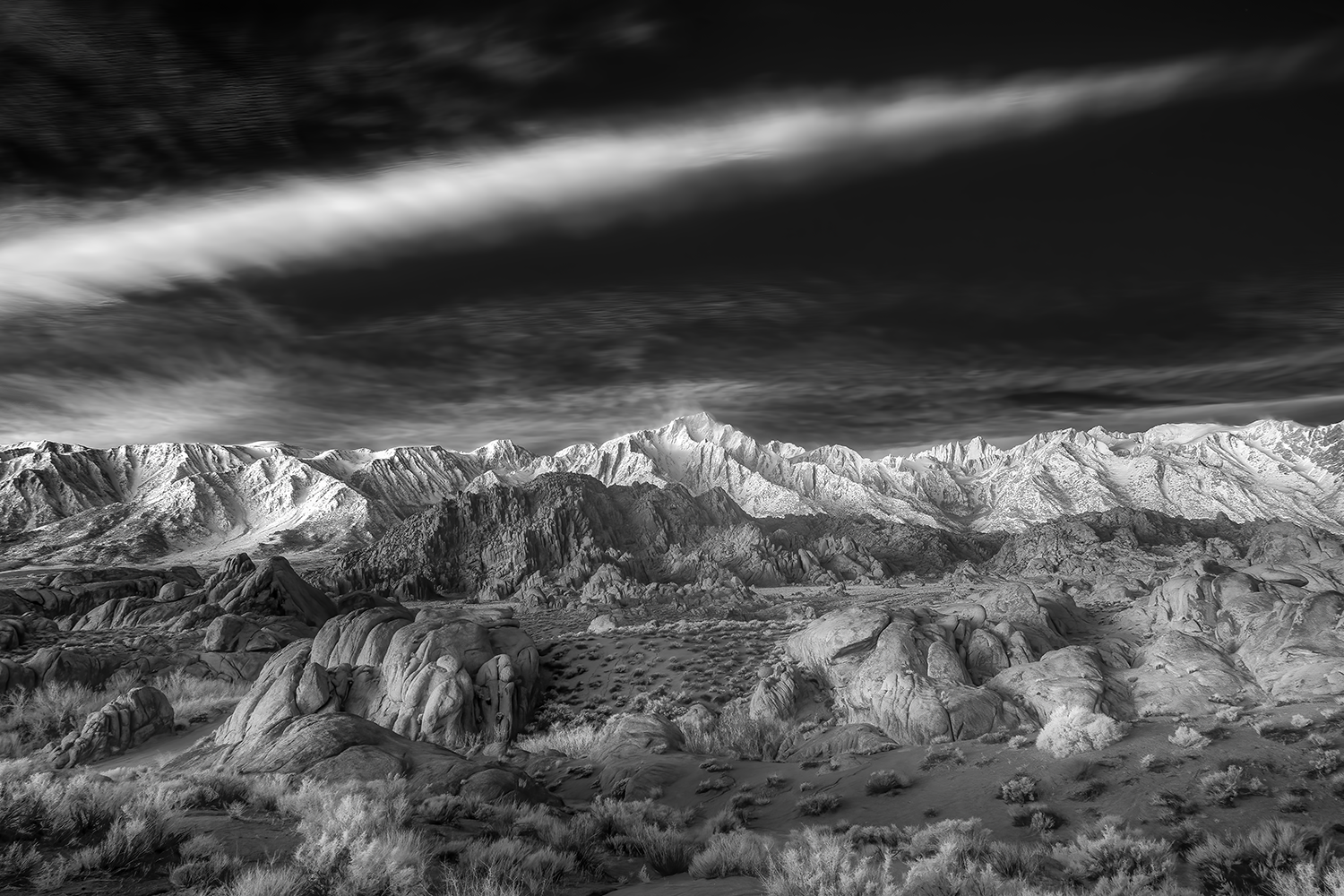
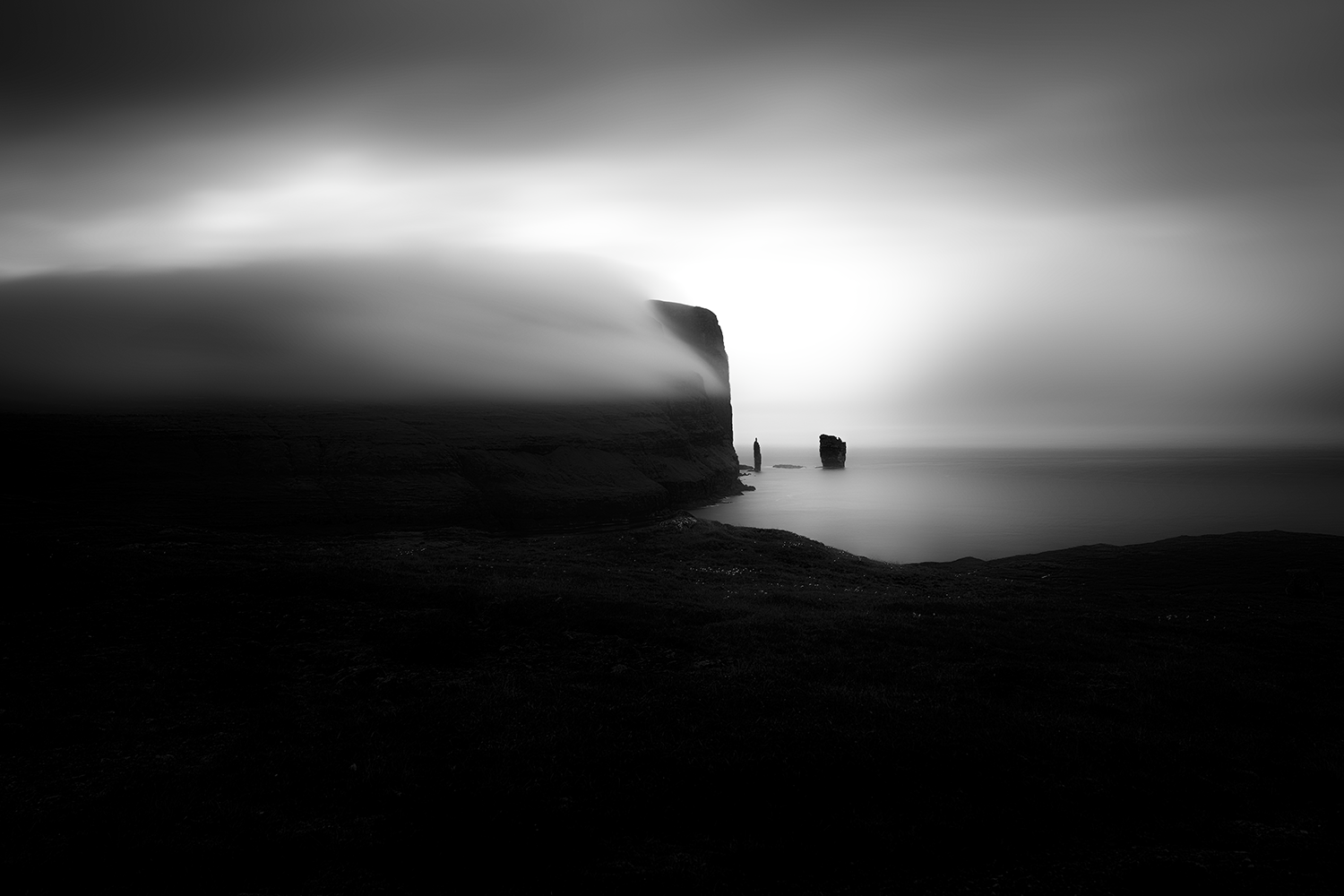
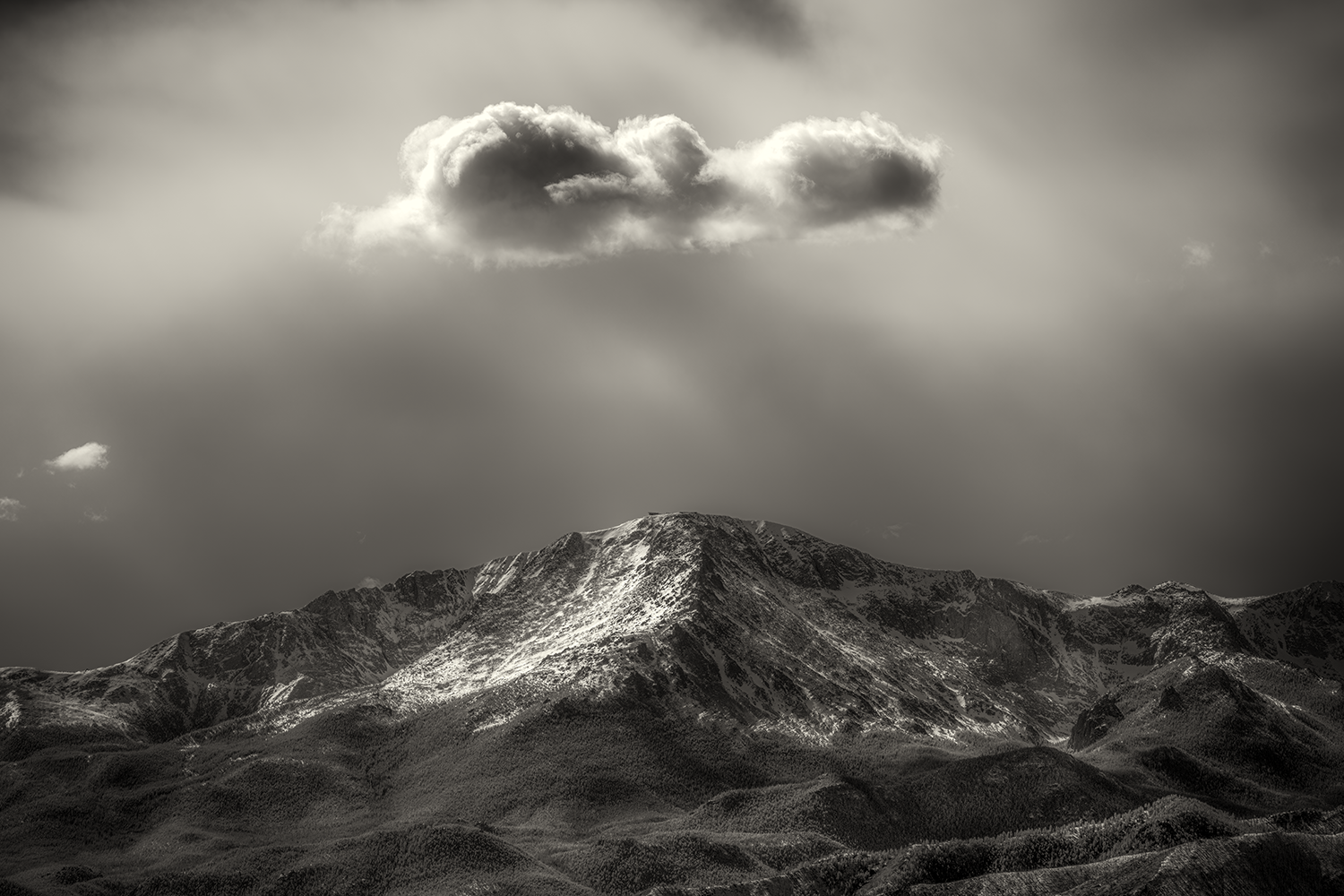
The Black and White Art Exhibition invited artists to explore the visual power of a limited palette. What drew you to the theme, and what does working without, or with minimal, color allow you to communicate that color may not?
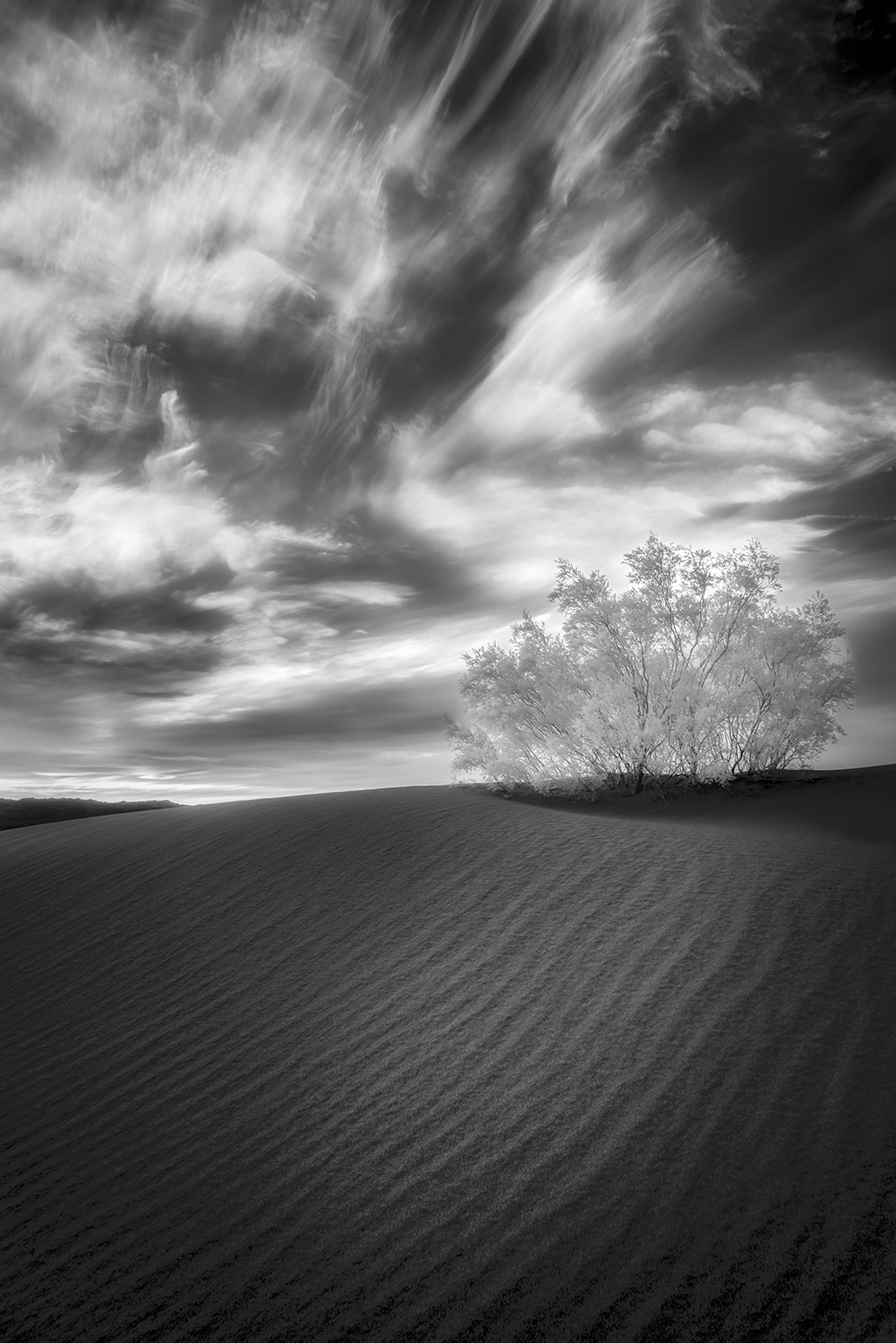
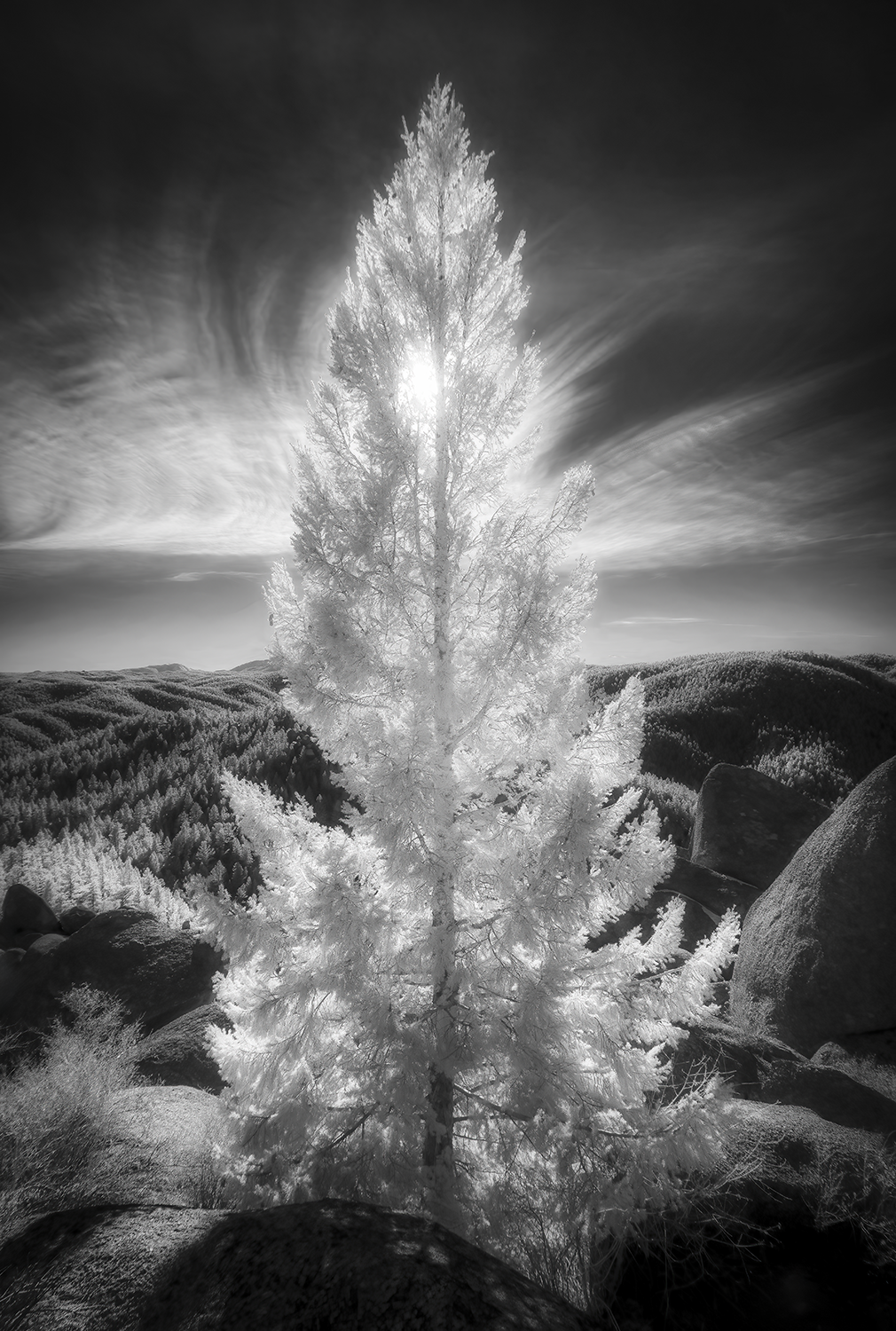
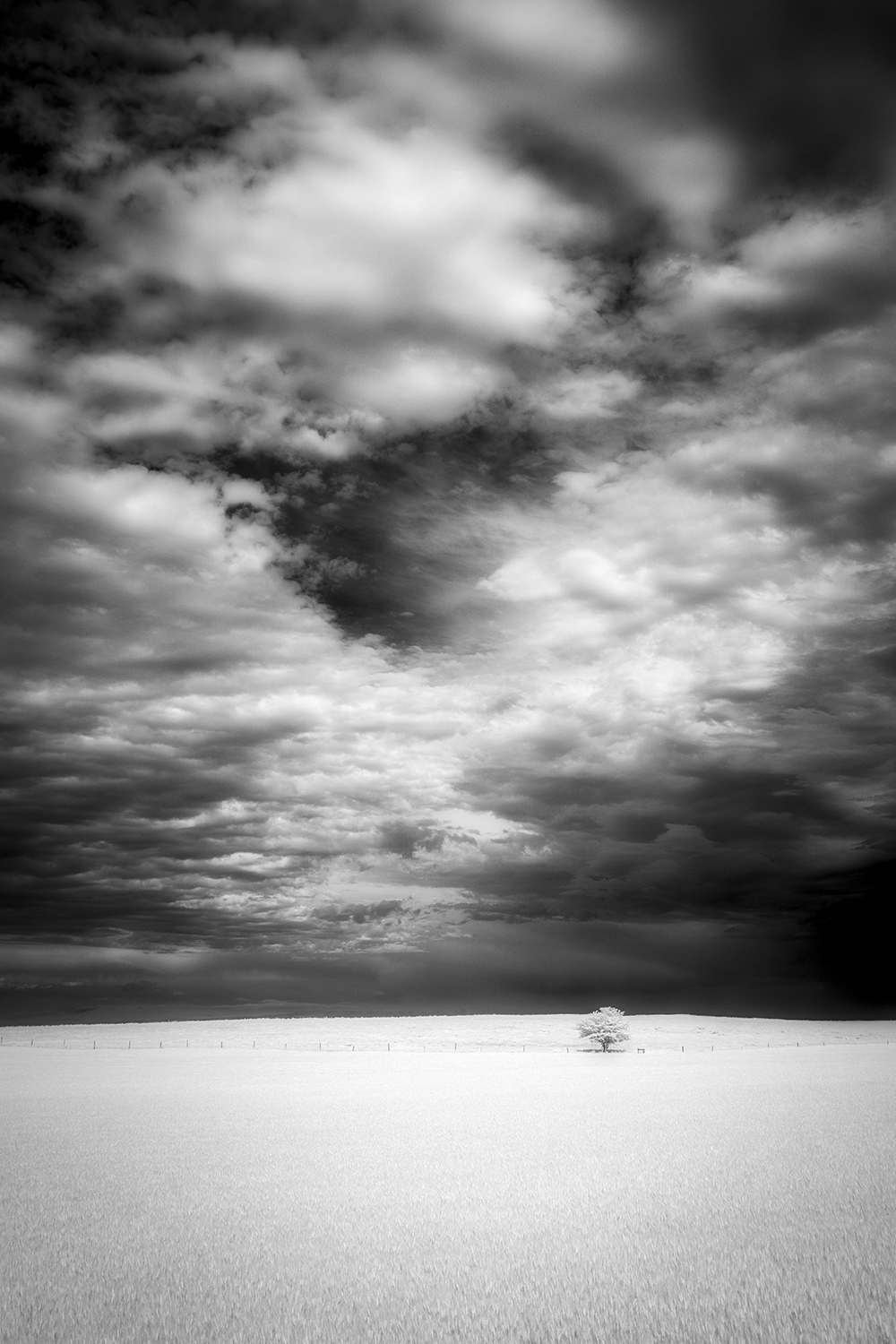
I work in infrared, so black and white isn't really a restriction for me. It's closer to a translation. Infrared strips a scene down to light and structure and lets you see what's underneath the color, the part of the landscape that doesn't announce itself in an ordinary photograph. Removing color removes a layer of familiarity. You stop reading "blue sky, green shrub" and start reading light, weight, and contrast instead. That shift is where the feeling of a place, its age, its quiet, its frequency, actually comes through.
Your selected artwork stood out in this exhibition. Can you tell us about the inspiration behind the piece, including its story, subject, or emotional meaning, and what you hoped viewers would experience when they encountered it?
Sky Keepers was made on the Taos Plateau, land Pueblo peoples have held sacred for a thousand years and that I've come to know as kin over the years I've spent there. The image sits between two storms, one leaving as another gathers, with the old volcanic hills standing beneath it, unmoved, the way they always have. In infrared, the sky stopped looking like weather and started looking like memory. I wanted viewers to feel that stillness underneath the drama, the sense of something ancient just holding steady while everything above it changes.
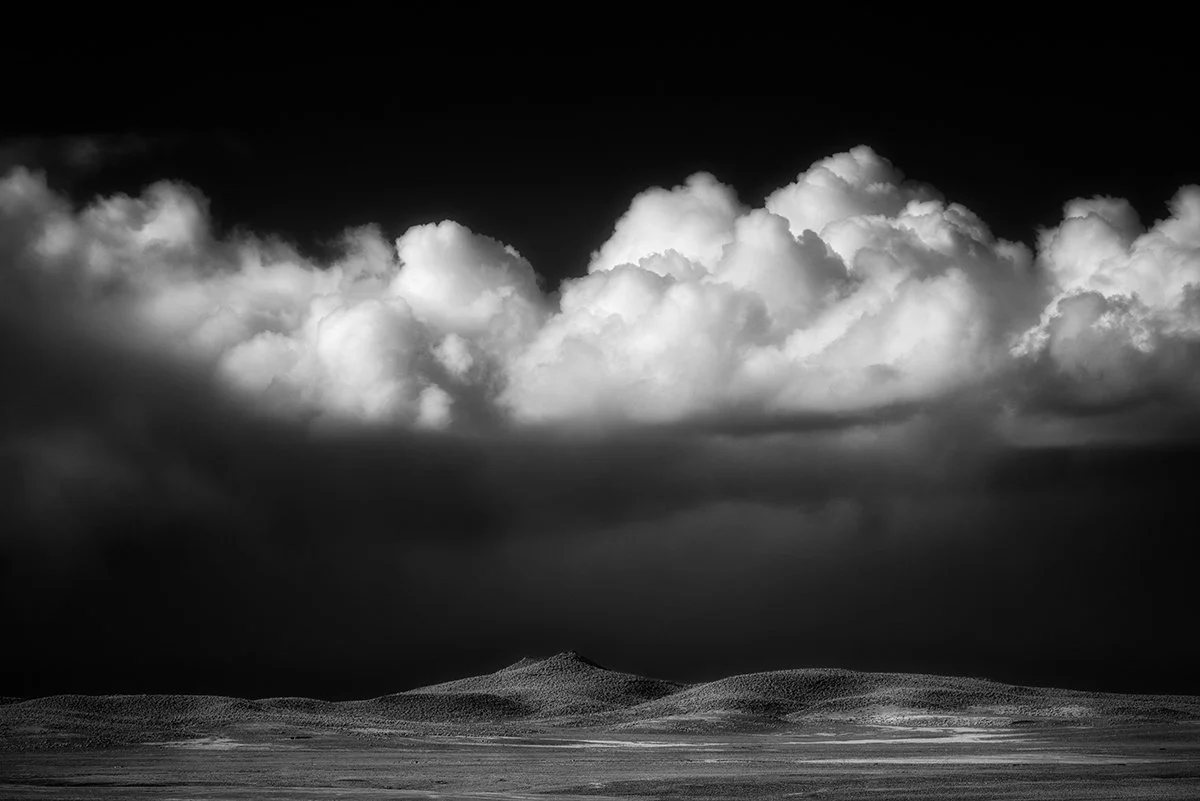
Sherri Mabe (1st Place) - Colorado. "Sky Keepers" Archival Pigment, 18 x 12 in
Between two storms, the Taos Plateau keeps its ancient watch over the land Pueblo peoples have held sacred for a thousand years, land I have come to know as kin. The clouds rise luminous against the dark, one storm leaving as another gathers, and beneath it the old volcanic hills stand as they always have: witnesses, keepers, unmoved. In infrared, the sky becomes something closer to memory than weather.
“1st Place Winner - Jurors Choice” Award
Website: https://sherrimabeimages.com/
Black and white artwork often relies heavily on elements such as contrast, light, shadow, texture, composition, and value. Which of these artistic elements played the most important role in your featured work, and how did you use it to strengthen the final piece?
“Bones of the Land”, 12in x 18in, Archival Pigment, Infrared Photography
Value did the most work here. The clouds needed to feel luminous against real dark, almost lit from within, for the image to carry the emotional feel I was after. Infrared exaggerates that range naturally; foliage and cloud go bright while sky and shadow go deep, but I still had to compose and process carefully to keep the volcanic hills grounded and quiet as a secondary element while the sky did the more dramatic work above them. That contrast between a hushed foreground and a luminous, turbulent sky is really the whole composition.
As an online art contest, your work is being viewed on screens all over the world. How does it feel to share your art in a digital space compared to a physical gallery, and how do you think that accessibility impacts the way people connect with your message?
I'm an introvert, so there's something I actually appreciate about a digital space. People can sit with an image on their own time, without me in the room, without the performance of an opening. What I miss is the thing you only get in a gallery: standing near a print, the particular quiet of people looking at real paper under real light. That said, having work seen by people who'd never walk into a gallery is its own gift.
As an artist, what is one skill, technique, creative habit, or professional lesson you have developed that has had a meaningful impact on your growth? How has that development influenced the work you create today?
I studied photography formally, but the growth that's mattered most to me has come from what I built on my own since then, via mentors, workshops, and a lot of trial and error over many years. The real skill underneath all of it is following my own intuition, and being able to sit in silence long enough to hear what it's telling me. Infrared work especially rewards that. You can't rush it or force a scene into meaning something, you have to wait, and listen, and trust what you're drawn to before you understand why.
Looking ahead, what is next for you as an artist? Are there any upcoming projects, creative goals, new directions, or ideas you are excited to explore—and where can our audience follow your work and continue supporting your artistic journey?
Right now I'm actually in a bit of self-imposed downtime, giving myself space to sit with what comes next rather than rushing into another project. I'm contemplating a few different directions I could take my work. Given how much of my process depends on intuition and quiet, that kind of pause feels less like a stall and more like part of the work itself. Whatever comes out of it, I imagine it will still be rooted in this same territory: land, memory, and light. You can find my work at sherrimabeimages.com, and follow along at instagram.com/starlitwaltz.
Anything else you want our audience to know about you?
This work has been decades in the making, and it means a great deal to have it recognized in this way. I never had a conventional path in art. I moved constantly, raised three children, never had a traditional career, and much of what I know about infrared photography, I taught myself over many years rather than in a straight line. If there's anything I'd want someone to take from that, don't give up on your dreams, and that it is never too late to find the work that's actually yours. Thank you for taking the time to look closely at my work.
Sherri Mabe's work reminds us that meaningful observation often requires slowing down. Through her use of infrared photography, she invites viewers to move beyond familiar ways of seeing and instead consider the relationships between light, contrast, memory, and place.
Her award-winning work, Sky Keepers, captures this perspective beautifully, presenting a landscape shaped by movement and changing weather while grounding the viewer in the quiet permanence of the land beneath it. It reflects the larger themes that continue to guide Mabe's practice: land, memory, light, and the importance of trusting intuition.
As Sherri takes time to reflect and explore what comes next in her artistic journey, we are honored to recognize the decades of observation, experimentation, and dedication that have shaped her work.
CEV Art Gallery congratulates Sherri Mabe on earning First Place in the Black and White Art Exhibition and thanks her for sharing her creative journey with our community.
To explore more of Sherri Mabe's work and follow her artistic journey, visit Sherri Mabe Images and follow her on Instagram.
Interested in being featured on the CEV Art Gallery blog? Keep an eye out for our next juried exhibition call for artists.
