

Meet Sue Graef: Juror's Choice Best in Show, “Chromatic”
Location: Florida
Meet Sue Graef: Juror's Choice Best in Show, Chromatic
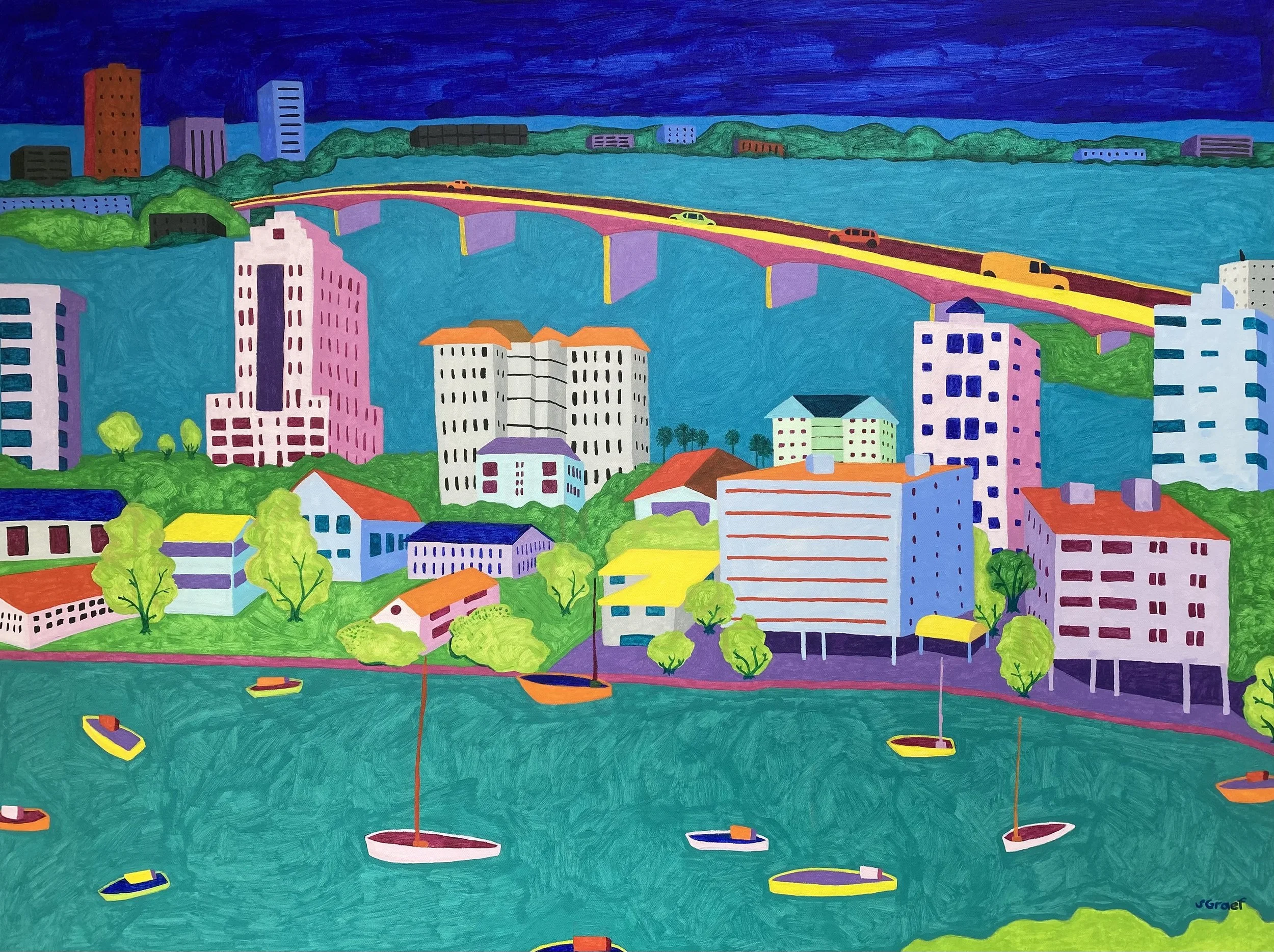
Every so often, a painting stops jurors in their tracks, and this year, that painting was Tampa Skyline Rainbow by Clearwater-based artist Sue Graef. Selected as Juror's Choice Best in Show for Chromatic: An Online Juried Exhibition of Color & Abstract Expression, Graef's work is instantly recognizable for its bold, saturated palette and crisp, confident shapes, the result of a decades-long relationship with color that she describes less as planning and more as conversation.
Graef's path to painting full-time wasn't fast. It began as a childhood habit in New Jersey, sharpened through formal training at the Philadelphia College of Art, Tyler School of Art, and Clemson University, and was sustained for years alongside a full-time job before she could finally paint on her own terms. Today, her work draws from something as simple as a walk, a skyline glimpsed from the highway, a rainbow catching the light, translated onto canvas in heavy body acrylic with clean, unblended edges that let each color hold its own.
In this Q&A, Sue shares more about her creative process, the story behind her award-winning piece, and the advice she'd give artists just starting to find their voice.
Congratulations on being selected as the Juror's Choice Best in Show winner for CEV Art Gallery's Chromatic: An Online Juried Exhibition of Color & Abstract Expression. To introduce yourself to our audience, can you share a little about your artistic journey and what first inspired you to become an artist?
There isn't really a hard line between when I wasn't an artist and when I was. There was no single spark of inspiration that made me decide to become one — only the moment I realized I already was one, and that I wanted to keep going. That realization came more than five decades ago, as a kid making artwork in the house where I grew up in Haddonfield, New Jersey. As a young teenager, I had the enormous benefit of my mother's encouragement and guidance — she was an artist herself, and she was my first real teacher. That early foundation grew into a more formal education, first with studio classes at the Philadelphia College of Art, then at Tyler School of Art at Temple University, and finally at Clemson University, where I earned my degree. In those early years, I carried a sketchpad everywhere. I drew what I saw, in pencil, pen, and watercolor. Then school brought the rigor: figure drawing, composition, design, perspective, color theory — all the fundamentals. At the time, I honestly didn't see the point of half of it. It felt abstract, disconnected from the act of just making pictures. Now I understand differently — I lean on that training every single day I paint. The path between then and now hasn't been a straight line. There were long stretches of working full-time jobs just to make ends meet, counting down the hours until evenings and weekends when I could finally paint. It took decades of that rhythm — working to live, living to paint — before I could pursue art as more than something squeezed into the margins. I'm deeply grateful that for the past several years, I've had the opportunity to make art my full-time work.
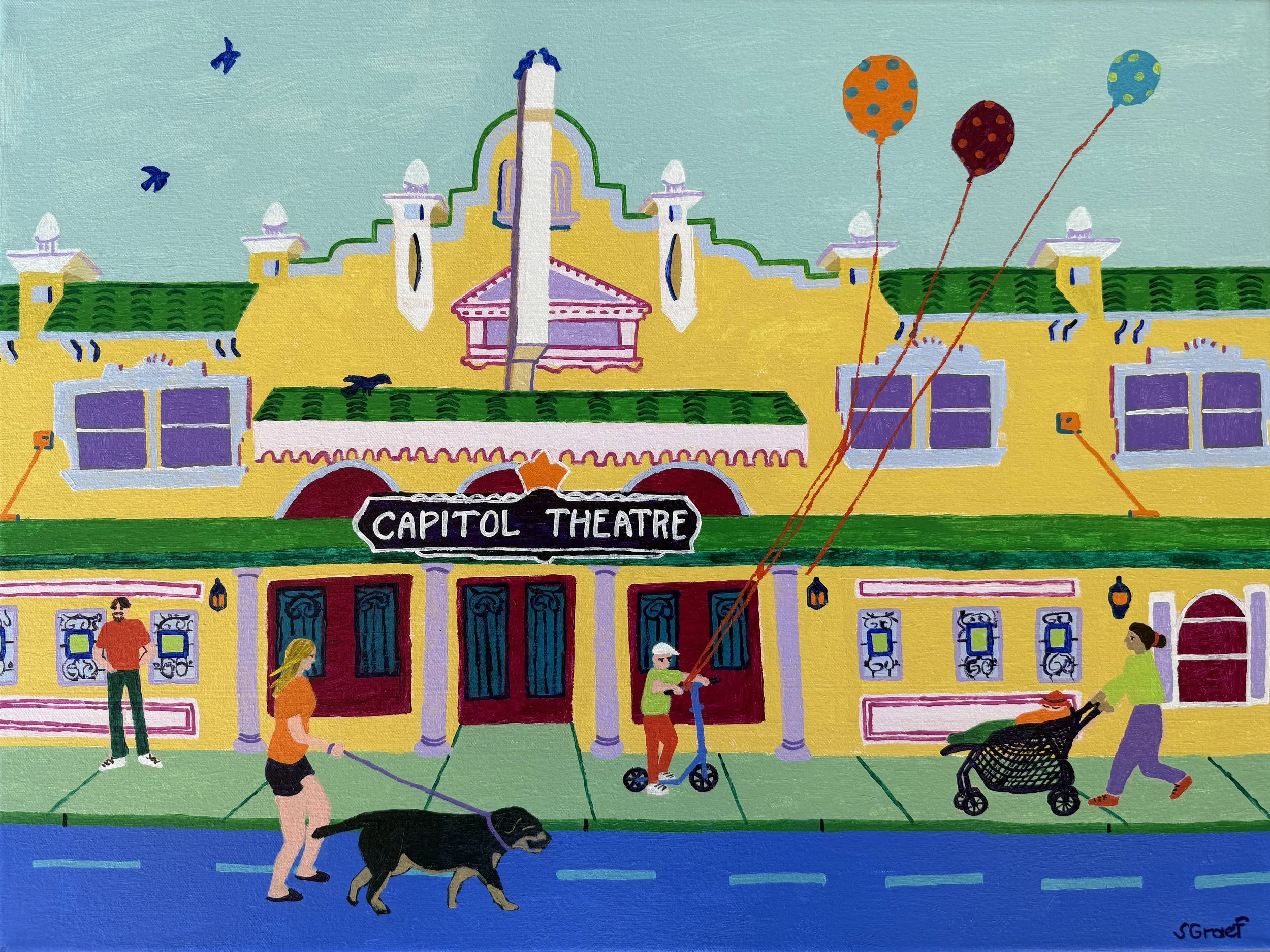
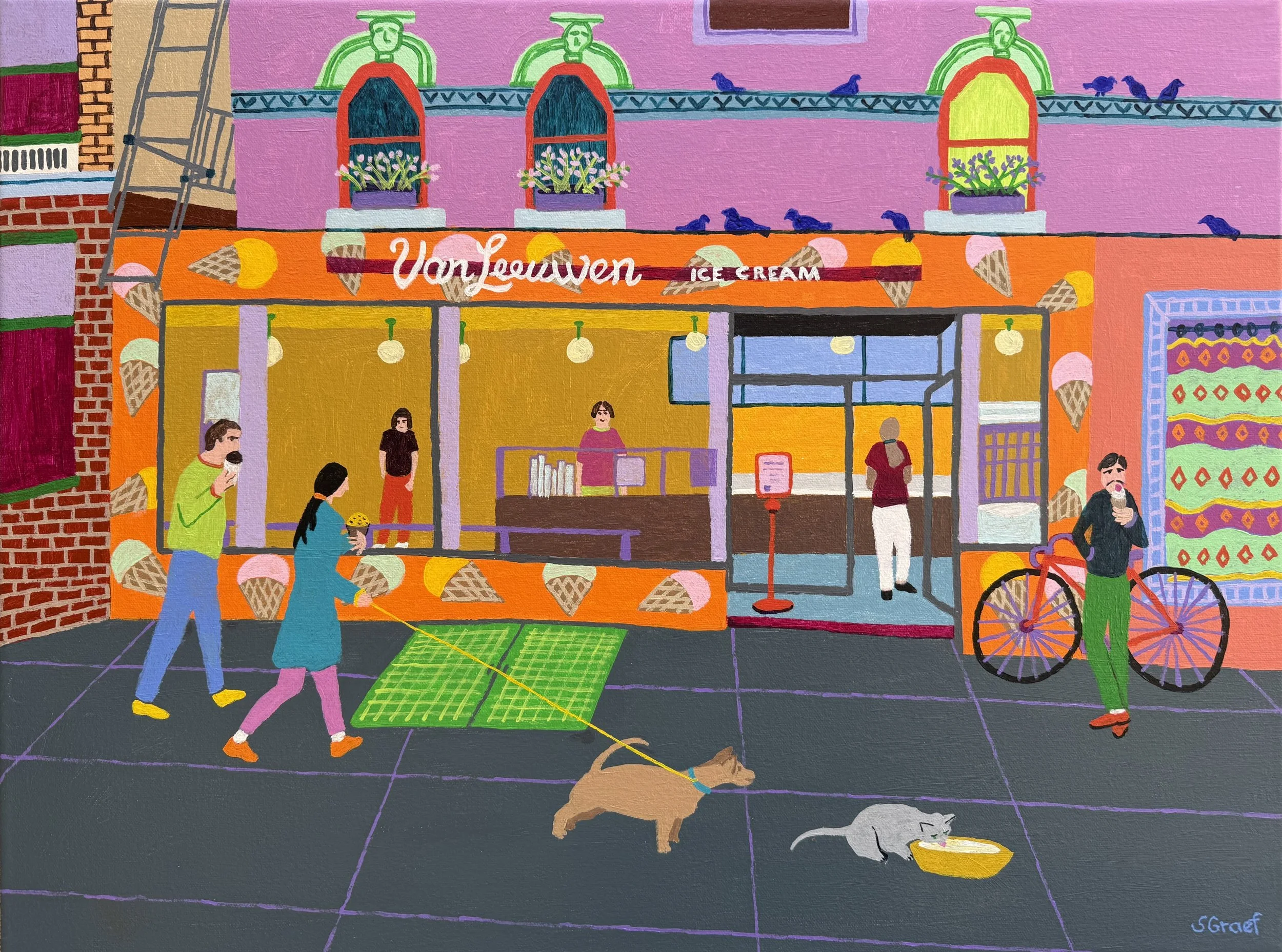
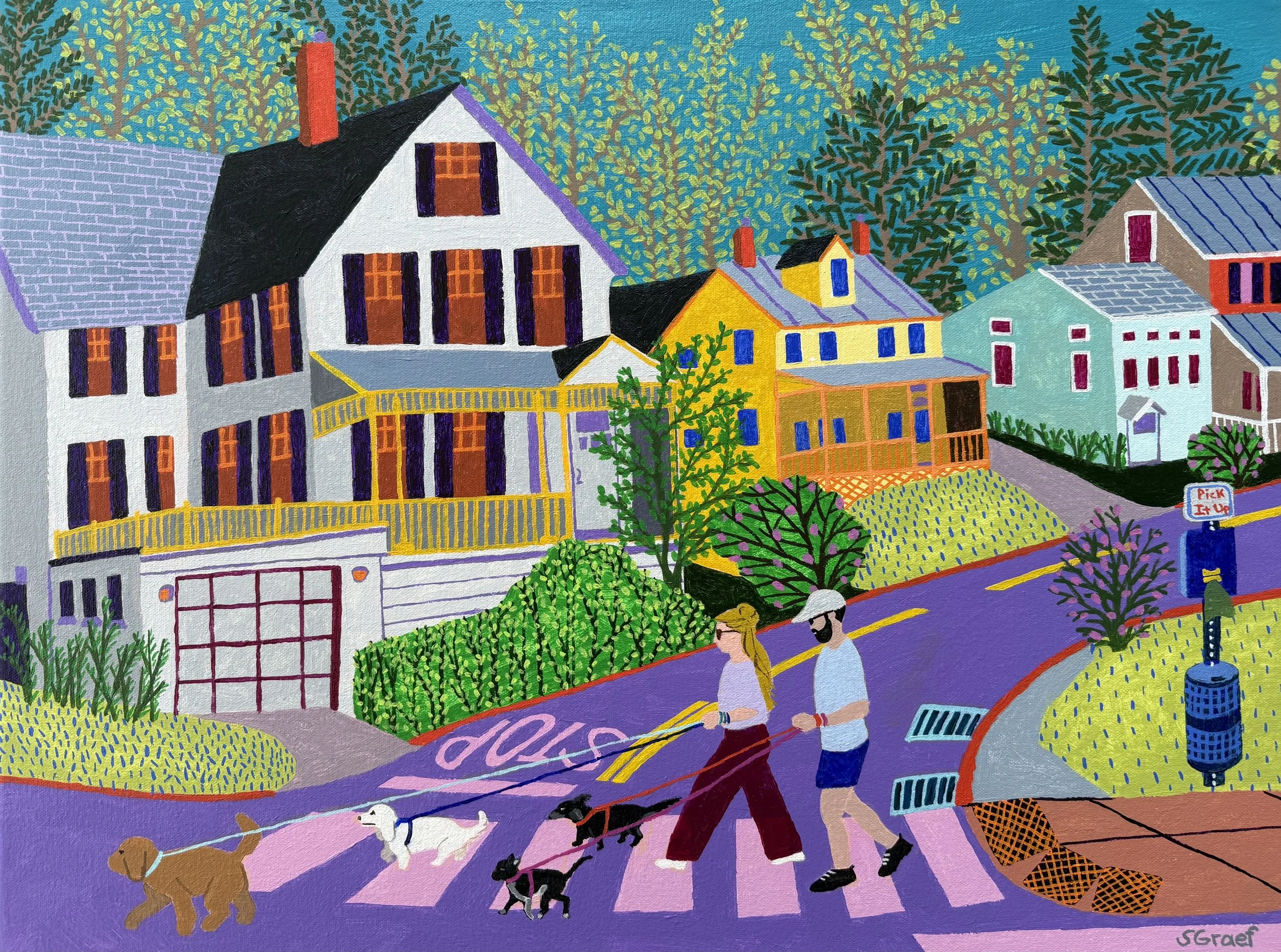
Color plays a significant role in your body of work. How do you decide on your color palette, and what emotions or ideas do you hope viewers experience when engaging with your art?
My color decisions happen intuitively, in real time, rather than being planned out in advance. Once I've laid out the composition, I start with the largest shape in the piece and choose its color first — usually based on a feeling, or simply an attraction to a particular color in that moment. I lay that color down, and then the next choice comes purely from what I think will look best alongside it. Color by color, decision by decision, that's how a painting builds until it's finished. It's a conversation with the canvas more than a formula. That process is really what allows me to work in the intense, bold, saturated color I'm known for — because I'm not locking myself into a predetermined palette, I can follow whatever combination feels most alive. What I love most is watching people react to the work — viewers often smile when they see my paintings, and that response means everything to me. More than anything, I want people to feel pleasure, interest, and curiosity when they engage with my art — a sense of playfulness that invites them to step outside their everyday reality, even just for a moment, and travel around the canvas into the world I've imagined.
Your artwork reflects a distinctive visual style. Can you walk us through your creative process, from the initial concept to the finished piece? Are there any techniques, materials, or personal experiences that consistently influence your work?
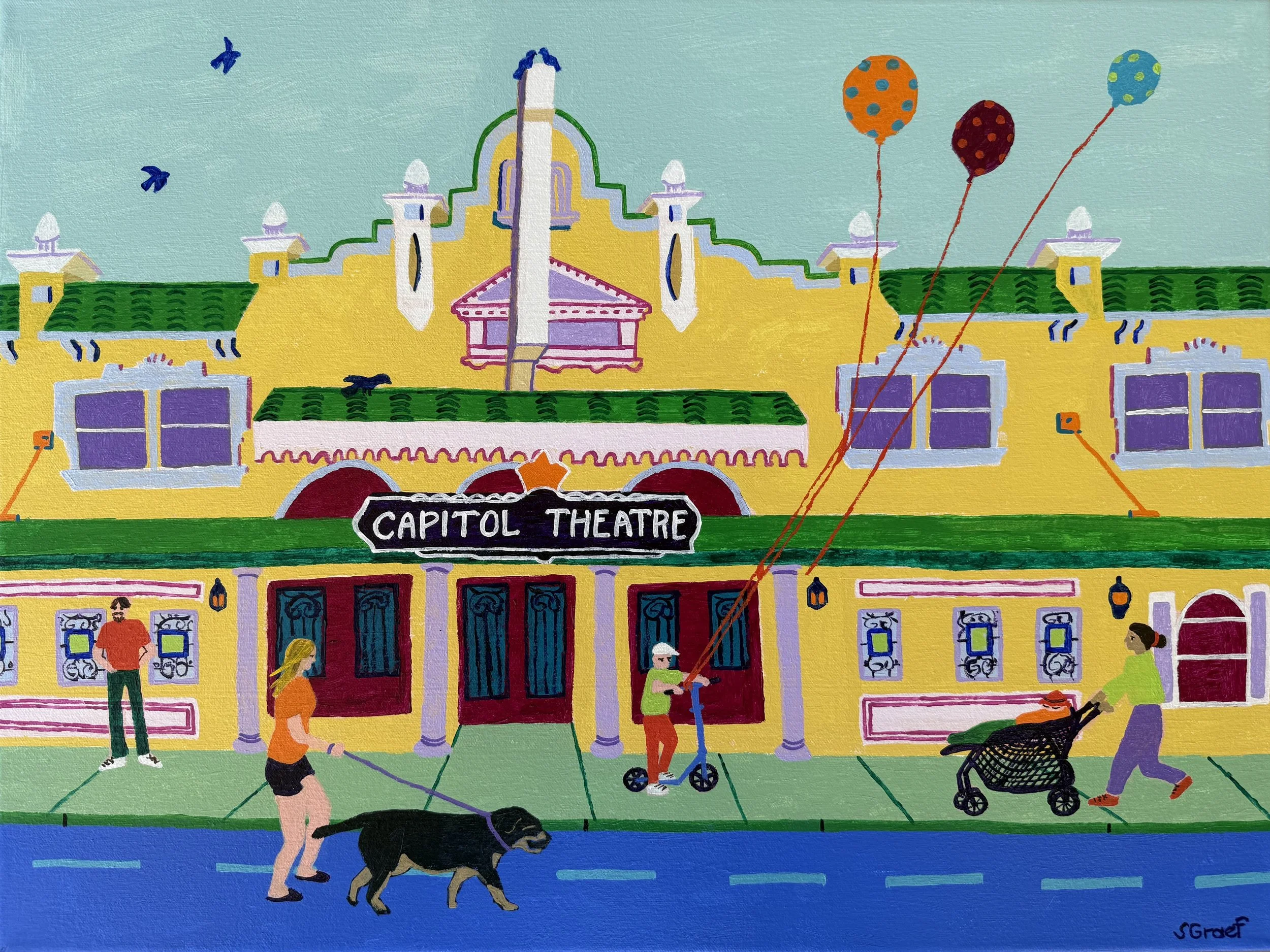
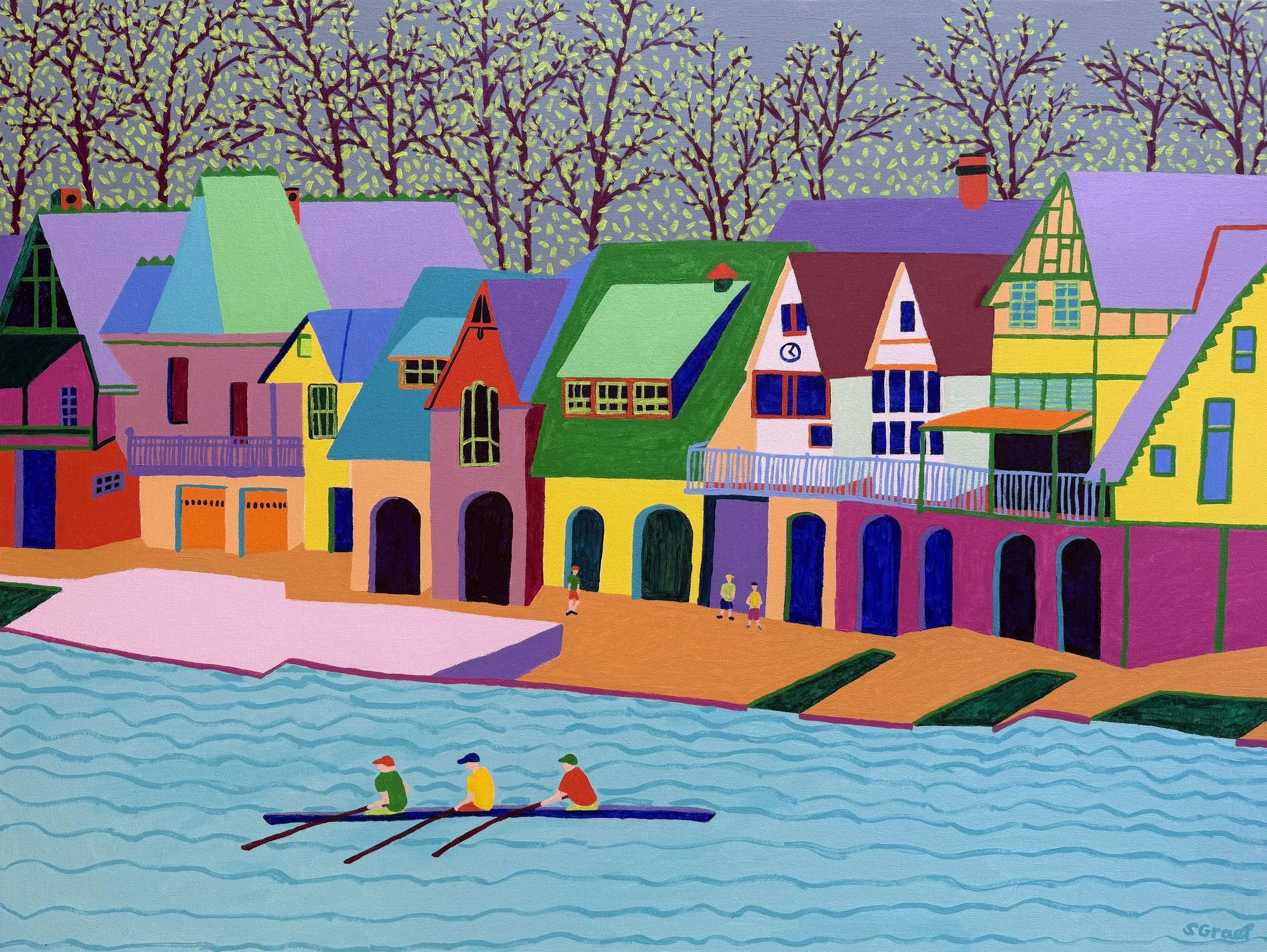
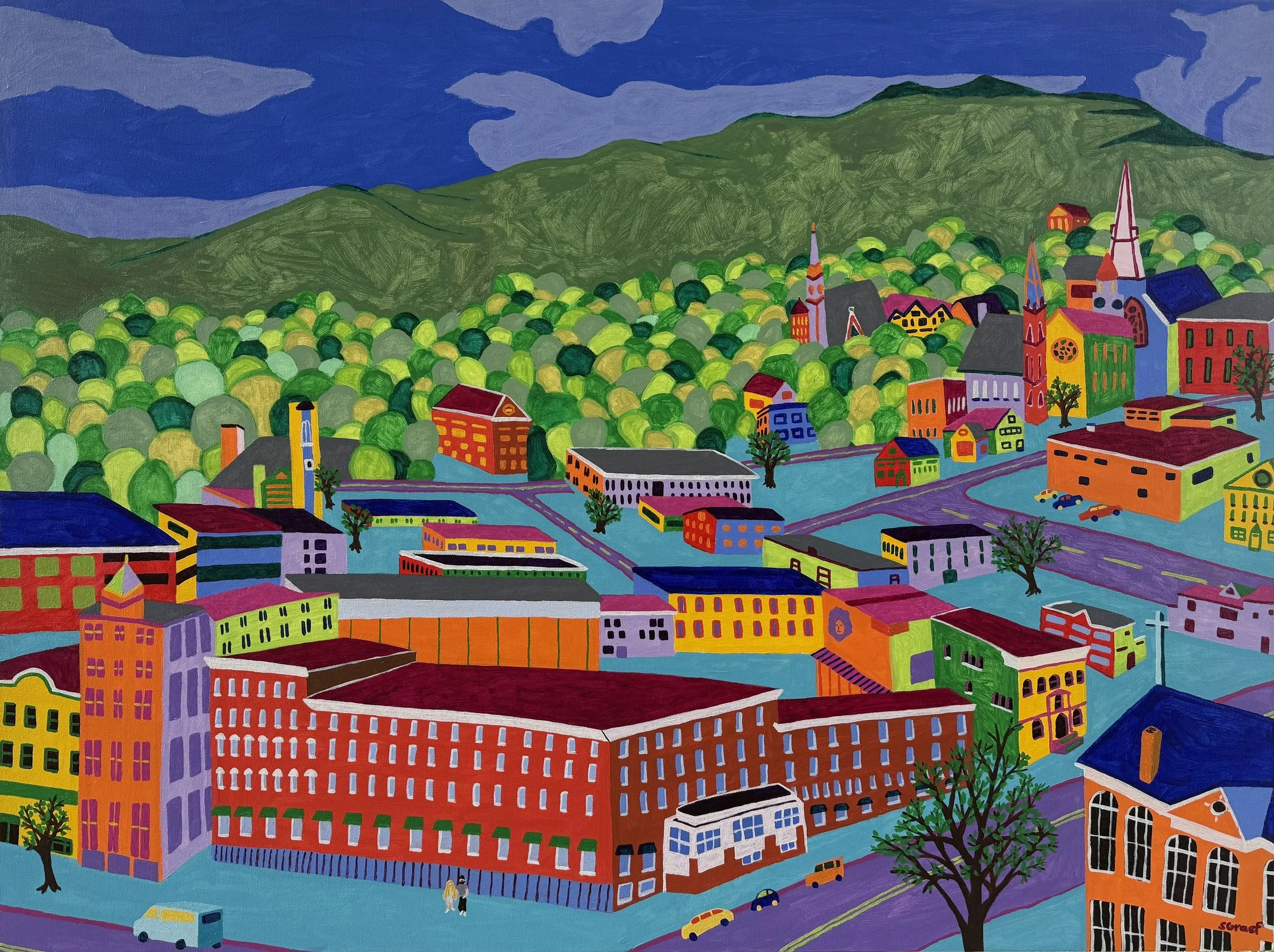
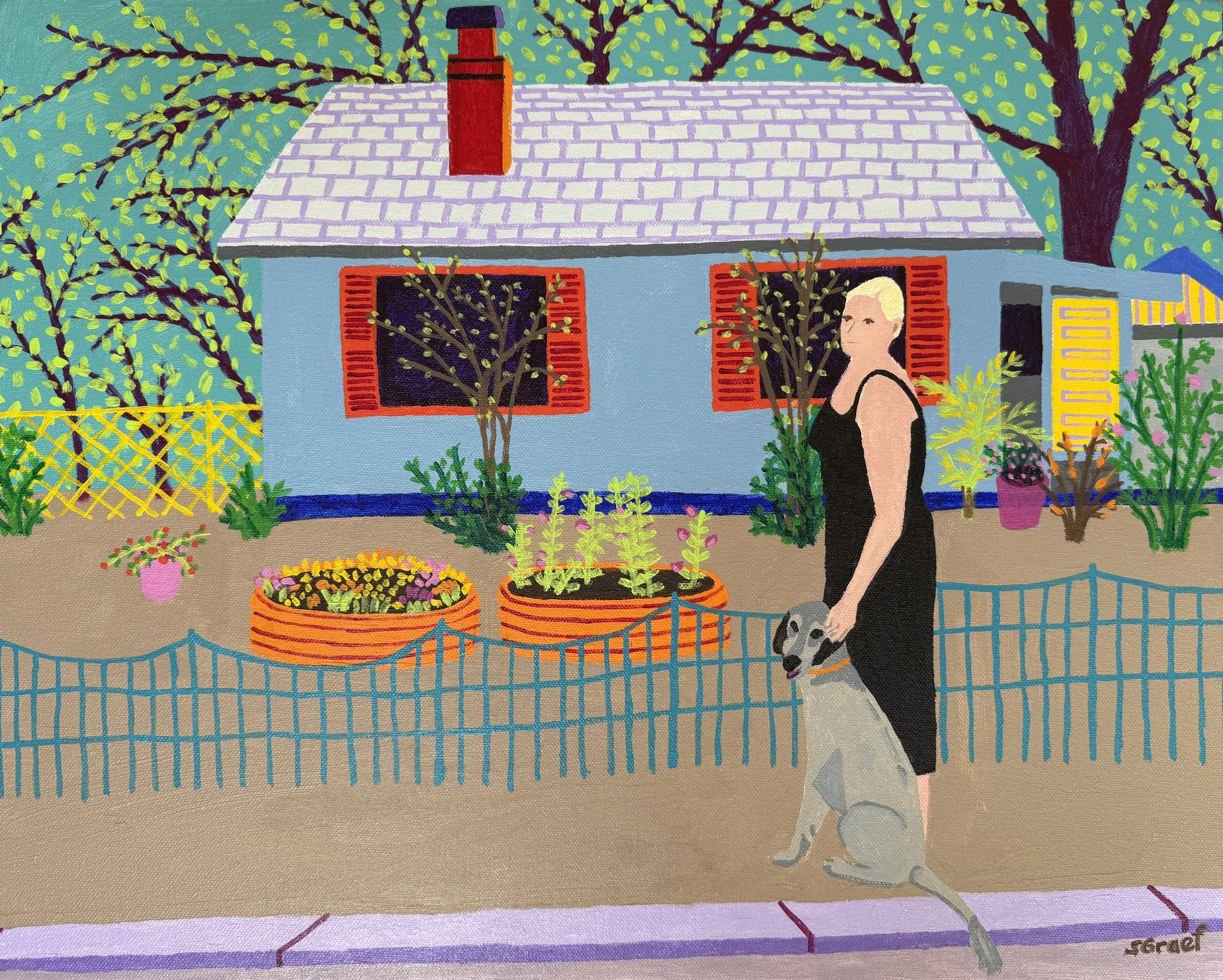
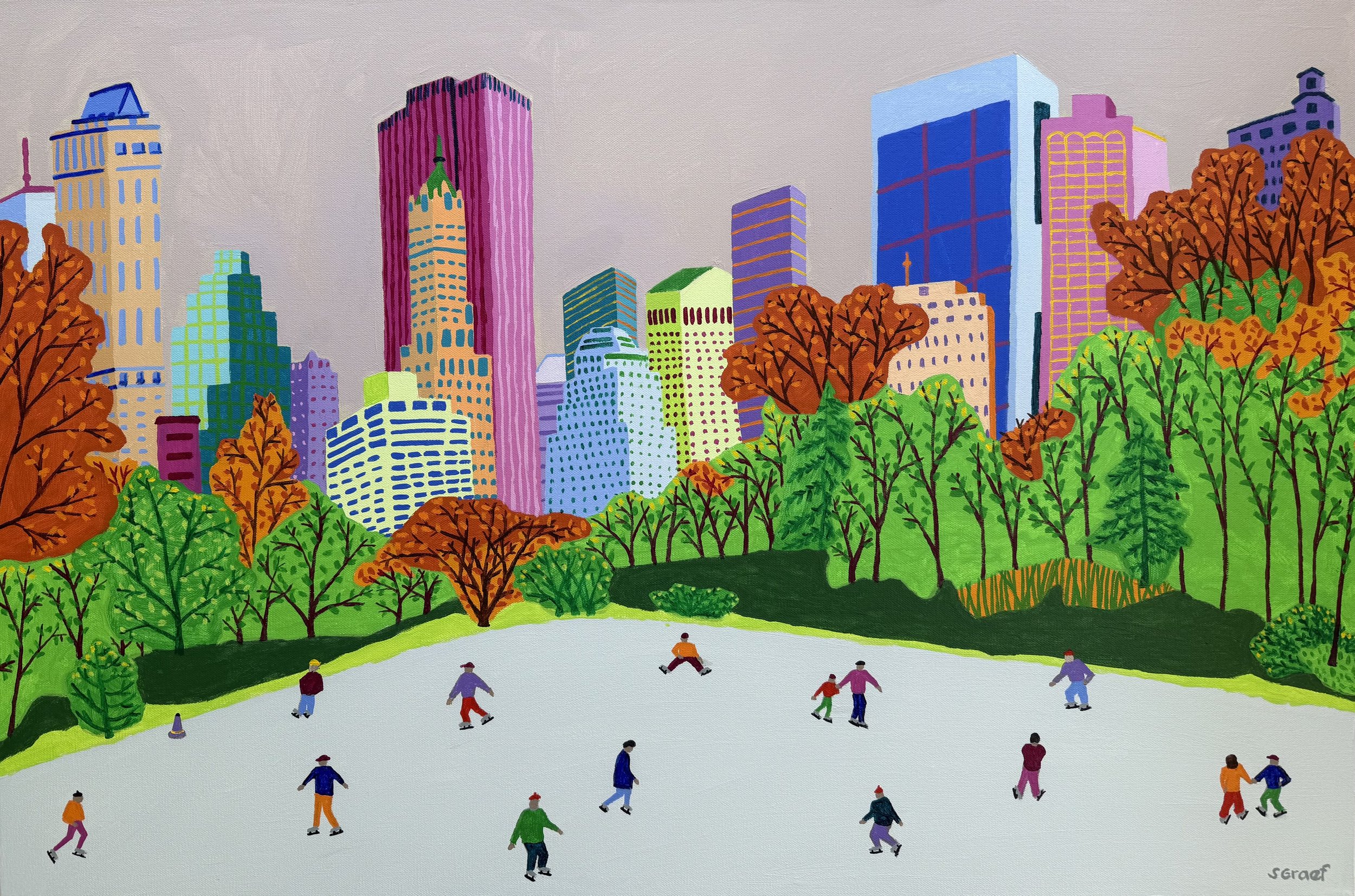
My process almost always starts on foot. I'll be out walking somewhere — a city street, a busy airport, a park full of people, the beach, or just around my own neighborhood — and something will catch my eye and make me want to recreate it on canvas. It might be the affection between a person and their dog, the movement of a crowd on a busy street, or a piece of architecture that stops me in my tracks. Whatever it is, I take dozens of photographs on the spot, because those references become essential once I'm back in the studio working out the details. Then the fun part begins. I paint out the basic composition and start filling in color, working intuitively the way I described — one shape, one color, one decision at a time. Throughout the process, I love adding small details that give a piece warmth and interest, the things that reward a longer look. I keep working until I look at the canvas and simply know it's finished: the colors have to feel coordinated, balanced, and attractive together, and the composition and color combined need to pull the viewer's eye around the entire canvas. Once I'm happy with that balance, I sign it and call it done. Technically, I work in heavy body acrylic, applying highly saturated color opaquely to the canvas. Where two colors meet, I keep the edge clean — no blending. That crisp boundary is intentional; it's the reaction of one color pushed right up against another that I'm after. As for what consistently shapes the work — it's the walking, really. I walk everywhere, and that habit feeds everything else: my love of people, animals, the outdoors, and urban streets, filtered through a lighthearted point of view that I hope comes through in every painting.
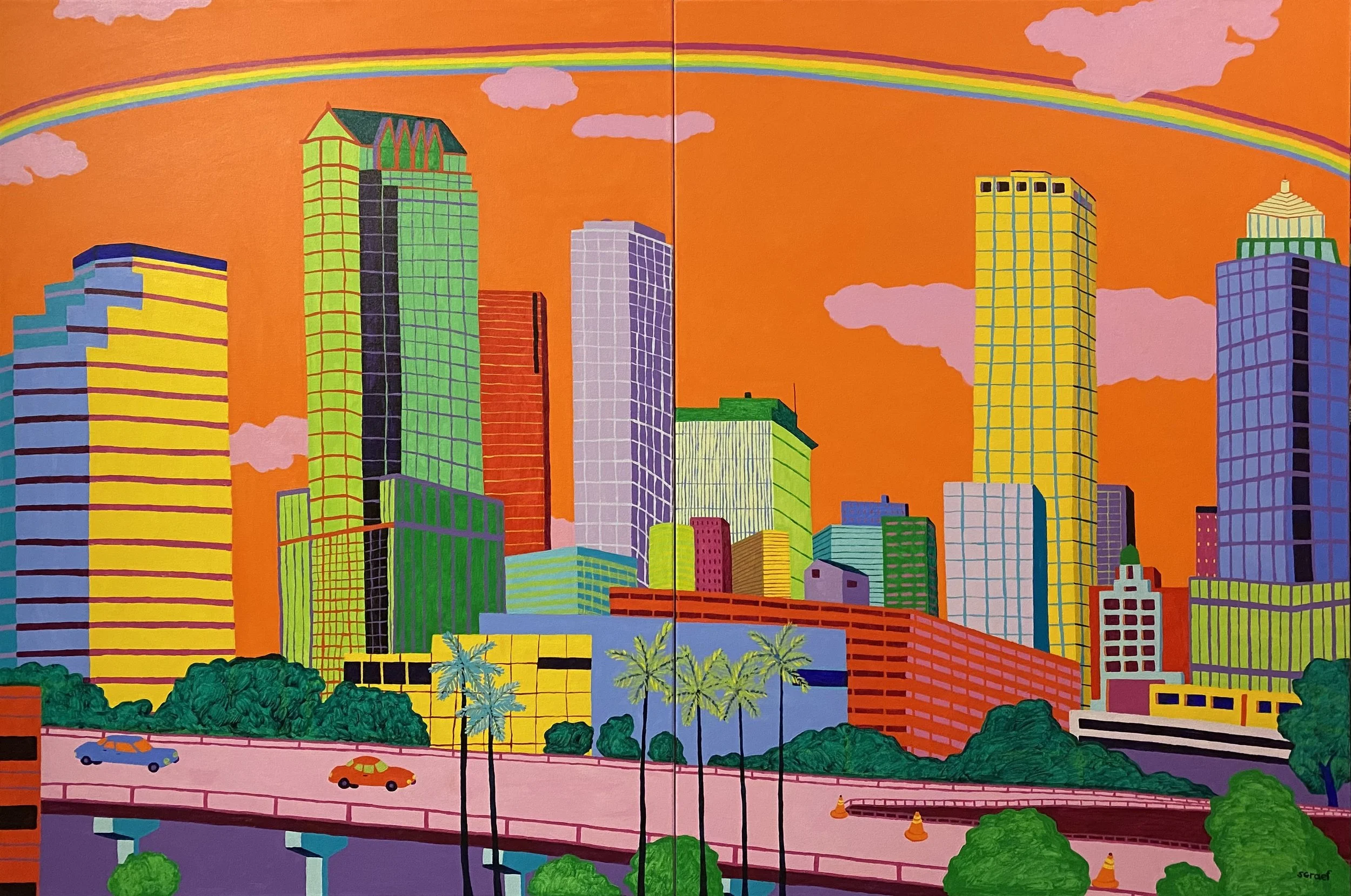
“Tampa Skyline Rainbow” by Sue Graef. 72 cm x 48 cm.
Acrylic on Canvas.
Here is a vibrant playground of intense color and bold composition expressing my view of the Tampa, Florida skyline with an exquisite rainbow.
“Best in Show - Jurors Choice” Award
Website: https://suegraeffineart.com/
Your award-winning piece, Tampa Skyline Rainbow, captivated our jurors with its vibrant use of color and composition. What inspired this work, and what story or message were you hoping to communicate through it?
“Clock at the Flatiron”, 20in x 16in, acrylic
Tampa Skyline Rainbow came out of a drive I've made many times — from Clearwater into Tampa, winding through the intertwining ramps and roads that carry you into the city. From different points along that route, the skyline reveals itself in stages, spread out against the sky in all its glory. I was drawn to the geometry of it: the windows, the rooftops, the roadways all layering into these clean, interlocking shapes that were a joy to translate onto canvas. I worked large for this piece — 48 inches high by 72 inches wide — and I was in the mood for the brightest, boldest color I could bring to it. There was one more element I knew I wanted from the start: a rainbow. I'm always thrilled when I catch one in the sky, and I wanted that feeling captured in the piece. So, in a way, this painting holds two stories at once — man's creation of a beautiful skyline, set against nature's creation of a gorgeous rainbow. Put those two things together, and honestly, it doesn't get better than that.
As the recipient of the Juror's Choice Best in Show award, what advice would you offer to emerging artists who are developing their own artistic voice and considering submitting their work to juried exhibitions?
The best advice I can offer is this: stay true to your own creativity as an artist. That means doing your own thing, fully, without trying to be like anyone else. Your voice is the whole point — protect it. Before you can break the rules effectively, though, learn them well. I mean the real basics: drawing, perspective, composition, color theory. Put in the time there. Then, once you know them, feel free to break every rule as you see fit — that's often where the interesting work actually happens. Beyond that, just create a lot of artwork, and don't stop. There will be rough critiques. There will be rejections. Keep going anyway. That persistence matters as much as anything else.
Anything else you want our audience to know about you?
I feel incredibly fortunate to be doing this full-time now, after so many years of fitting painting into the edges of a 9-5 working life. I don't take that for granted for a single day. Honestly, the exhibitions and the recognition are wonderful — I'm deeply grateful for all of it — but what really keeps me going is simpler than that. It's the walk that sparks an idea, the moment a color choice suddenly feels right, and the reaction on someone's face when they stand in front of a finished piece. If my work makes you smile, or pulls you in for a second look, I've done exactly what I set out to do.
Sue Graef's story is a reminder that a distinctive style isn't discovered overnight. Her advice to emerging artists says it best: learn the fundamentals, then have the courage to break them in your own direction, and keep making work even through rejection.
Congratulations again to Sue on her Juror's Choice Best in Show win. You can see Tampa Skyline Rainbow and the rest of the Chromatic exhibition on view now, and follow more of Sue's work at suegraeffineart.com or on Instagram.
Interested in being featured on the CEV Art Gallery blog? Keep an eye out for our next juried exhibition call for artists.
